
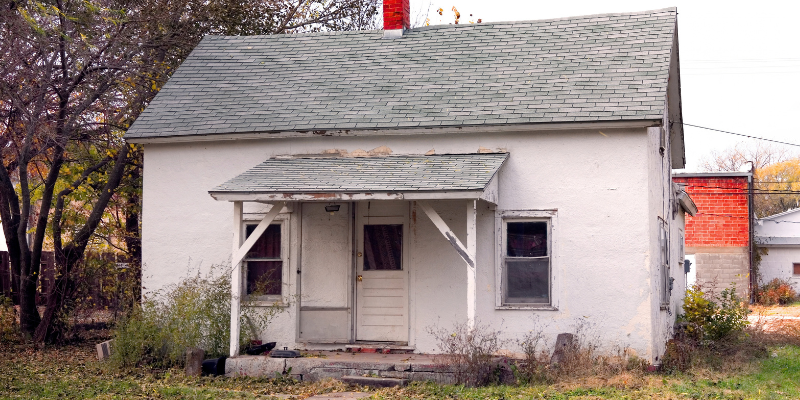
I once watched a crawlspace kill a sale in Antioch. The price was fine and so was the appraisal. What sank it was standing water under the house, a floor joist soft enough to take a screwdriver, and a lender who wanted no part of it. Houses needing real work sell every day across Tennessee, just not the way move-in-ready ones do. Which repairs you tackle, and how a cash number gets built, matter more than paint color ever will.
How Do You Sell a House That Needs Repairs in Tennessee?
Seventy days is what it took. That was the median time on market for a listing in a typical Tennessee ZIP code in August 2026, per Realtor.com data compiled by HomeValuePros. Roughly 22 percent of active listings in that ZIP took a price cut. Add a leaking roof, and the clock runs longer. Financed buyers bring appraisers, appraisers bring conditions, and I’ve seen that chain stall more than one contract I was working on.
You’ve got three roads out, and each one costs you something different.
First, you can list on the MLS as it sits and let the market decide. That’s fine when the bones are sound, and the flaws are cosmetic. FHA and VA buyers tend to drop off once an inspector writes up active leaks or a furnace that won’t light, because their lenders want those items fixed before funding.
Option two is borrowing against the house, fixing it up, and listing at full retail. It pays off for sellers with cash in reserve, a contractor who answers the phone, and six months of patience. Most sellers who call me have none of that.
The third road is a direct sale to an investor or a local cash buying company. There’s no appraisal, no repair escrow, and no financing contingency that falls apart on day 28. You take less per square foot and buy certainty with the difference. That’s been the trade-off in every cash transaction I’ve handled.
Cash Buyer Experts can get a cash offer for your Tennessee house as-is, so you can skip the repairs, showings, and waiting for a financed buyer to close.
What Repairs Should You Fix, and Which Should You Skip, Before Selling in Tennessee?

A seller in East Nashville put her savings into quartz counters and refaced cabinets. Two weeks later, the buyer’s inspector found knob-and-tube wiring in the attic. The buyer walked over the electrical, with a beautiful kitchen sitting right there.
Safety and systems come first. Everything else is decoration.
If you’re going the retail route, spend on water intrusion, exposed wiring, gas problems, and anything a lender will flag. Roof repairs in Tennessee generally run between $400 and $1,950 in 2026, and the typical job lands near $1,150. A targeted flashing or shingle fix is often the cheapest money you’ll spend to keep a buyer. A full replacement is another conversation.
Foundation work is where sellers freeze up. A typical Chattanooga-area foundation repair costs around $3,500 as of August 2026. Plenty of Tennessee homeowners hire a structural engineer first to get an independent read before a contractor pitches them a fix. I think that order is worth the extra week.
Skip the kitchen remodel, and pass on the new bathroom tile and landscaping package too. Nobody values a place with a bad roof and a 22-year-old air handler by its backsplash. And in a market where retail buyers hold the leverage, they’ll still ask for the roof.
Half-finished repairs are worse than none at all. I’ve walked into houses with one new window in a wall of failed ones. I’ve seen a bathroom gutted to the studs and left that way when the money ran out. Buyers read partial work as a warning about what they can’t see, and an appraiser can’t credit a project that isn’t done. Finish a repair properly, or leave it alone and price the house to match.
Paperwork gets skipped more than it should, and it costs sellers. Permits, receipts, warranties, and an engineer’s report all calm a nervous buyer. On a rough house, a tidy folder of documents can move the number more than a weekend of cleaning.
If you’d rather skip the repairs, contact us for a cash offer based on your house as-is. You can avoid spending money upfront and decide whether the offer makes sense for your situation.
Can a Home Inspection Tell You Everything Before You Sell in Tennessee?
Paying for your own inspection doesn’t hand the buyer a weapon. It does the opposite. You learn what their inspector will find six weeks before that report shows up in your inbox with a repair demand attached.
No inspection covers everything, though, and sellers often assume it does. A standard report looks at the visible, reachable parts of the house, like the structure, roof, HVAC, plumbing, and electrical. Sewer scopes, termite letters, radon tests, mold sampling, and chimney checks each go to a specialist with a separate fee.
A roof inspection alone costs about $150 to $500 in Tennessee in 2026. Pitch, size, and your part of the state all move that figure.
You’ll feel that coverage gap more here than in drier states. Our clay soil shifts and our summers are humid, so the two costliest problems I find in Tennessee houses sit where nobody looks, in crawlspaces and attics. When did you last stick your head under your own floor?
I’ll push back on some common advice here. A full pre-listing inspection on a house you already know needs a roof, HVAC, and electrical work is money spent to confirm what you can see from the driveway. If a cash buyer is doing their own walkthrough anyway, that report won’t change your net at all.
If you’re trying to sell your house fast in Tennessee, the pre-inspection earns its fee in the middle case. Think of a house with one suspected big problem and a lot of doubt around it. A structural engineer’s letter on a settling corner turns a rumor into a written, priced item. I’ve watched that one letter change a buyer’s whole approach. Buyers discount the unknown far more than a known repair with a number on it.
What Do Tennessee Disclosure Laws Require Before You Sell?

A seller once asked me if she really had to mention the foundation crack she’d been watching for nine years. She did.
Tennessee’s Residential Property Disclosure Act covers homes with one to four dwelling units. Under Tenn. Code Ann. § 66-5-202, the owner gives the buyer a disclosure statement listing known material defects. The other option is a disclaimer statement, and that’s only allowed if the buyer agrees to waive disclosure. The law doesn’t make you crawl under the house with a flashlight first. You answer from what you actually know. If something changes before closing, you owe the buyer an update.
Sellers misjudge the disclaimer all the time. It says you make no promises about condition and the buyer takes the property as-is, with whatever defects exist. Since it only works with the buyer’s waiver, as-is in this state takes two signatures. It isn’t a sign you stake in the front yard.
Even with a signed waiver, hiding a known defect is still hiding it. Lying in answer to a direct question falls outside any disclaimer’s shelter.
The disclosure statute also says the form isn’t a warranty and doesn’t replace a buyer’s inspection. Your listing agent carries a separate duty under Tennessee’s real estate licensing law to reveal adverse facts they actually know about. That duty is theirs, apart from yours as the owner.
Be specific on that disclosure form. Vague answers start arguments once the sale is done. A line like “chimney flashing leaked in 2019, patched by a licensed roofer, dry since” gives the buyer something concrete and gives you a record. Checking “unknown” when you clearly know the answer is how sellers end up in a lawyer’s office three months after the money’s spent.
How Much Cash Can You Get for a Fixer-upper in Tennessee?
Davidson County’s median home price hit $532,500 in August 2026, up about 1 percent from a year earlier, per Realtracs, the Middle Tennessee MLS. A seller hears that and pins it on a house with a dead HVAC system and a stained ceiling. Then the first offer comes in and feels like an insult. Medians describe finished houses on finished streets, and I’ve never seen anyone sell a median.
Buyers build cash offers backward from resale value. Start with what the house would be worth repaired, in that exact neighborhood, based on the last 90 days of closings. Then subtract the repair budget, the holding costs, the resale commission, and the buyer’s margin. What’s left is your offer. If someone won’t walk you through those four subtractions, they’re hiding one.
Repair estimates show you who’s honest and who’s just hopeful. An investor pricing repairs at $18,000 on a house that plainly needs $60,000 of work is green or plans to renegotiate once you’re hooked. I’d rather show a seller a higher repair number and a firm price than the other way around.
Now stack it against the listing route, and not against some imaginary full-price sale. Commissions still run in the 5 to 6 percent range statewide. Tennessee’s realty transfer tax is $0.37 per $100 of the sale price, but state law puts that one on the buyer. Your side of the sheet gets repair credits, a month or two of mortgage payments, utilities, insurance, and whatever you give up when the inspection report lands.
Run both numbers all the way down. Sometimes listing wins by a lot, and I tell sellers that straight. On a house that needs repairs of the structural kind, with deferred maintenance piled three deep, the gap closes fast. At that point, the cash number reads more like a fair trade for speed and certainty. If you’re considering cash home buyers in Memphis and other Tennessee cities, we can walk through the numbers with you.
What to Watch for Before You Sign Anything

The contract matters more than the number. Read the inspection period language closely. A long one paired with a vague “satisfactory inspection” clause gives the buyer a legal exit and costs you a month.
Check whether the buyer is really the buyer. An assignment clause lets a wholesaler market your contract to someone else. Sometimes that ends fine, and other times it ends with a missed closing date and a small deposit that never amounted to much. So ask straight out: are you closing on this yourself, or assigning it? The answer tells you most of what you need to know.
Ask for proof of funds dated within the last 30 days. Ask which title company they use, then call it. Tennessee closings run through title agents and attorneys who see the same buyers again and again. A two-minute call will tell you whether the person across the table has closed here before.
Get the earnest money in writing, and make sure it’s deposited, since that’s the last real test. A serious buyer puts real money at risk on a short timeline, while a tire-kicker wants ten days to “confirm numbers with a partner.”
Want a second set of eyes on an offer you already have? We’re glad to look it over, or, as a company that buys houses in Germantown and the surrounding Tennessee cities, set a cash number beside a retail estimate and walk through both with you, at no cost and no obligation.
Frequently Asked Questions
Do I need to make any repairs before selling for cash?
No, and that’s the point of this kind of transaction. A legitimate cash buyer prices the repairs into the offer and handles them after closing. You don’t have to patch drywall, service the HVAC, or haul anything out. Leave behind whatever you don’t want.
Can I sell if I still have a mortgage?
Yes. The payoff comes out of the sale proceeds at closing, the same as in any other transaction. If you owe more than the house is worth, say so early. The math changes, and you may need to talk about a short sale instead.
Do I have to fix code violations before selling in Tennessee?
No. You can sell a house with open violations, and many buyers in this space expect them. Whether you’re in Memphis, Nashville, or Chattanooga, you still have to disclose what you know. A buyer who agrees to take the house that way takes on the fix after closing.
If you’re weighing your options on a Tennessee property and want a straight answer about what it’s worth as-is, Cash Buyer Experts can give you that answer. Reach out to us at (901) 883-0966, and we’ll talk through the numbers together. No pressure, no obligation, and if listing turns out to be the better move for you, I’ll say so.
Helpful Tennessee Blog Articles